
Vital records
How to request a birth record from Italy
A family-history request for an Italian birth act: confirm the comune, check the free portals, write stato civile, and ask the fee before you pay.
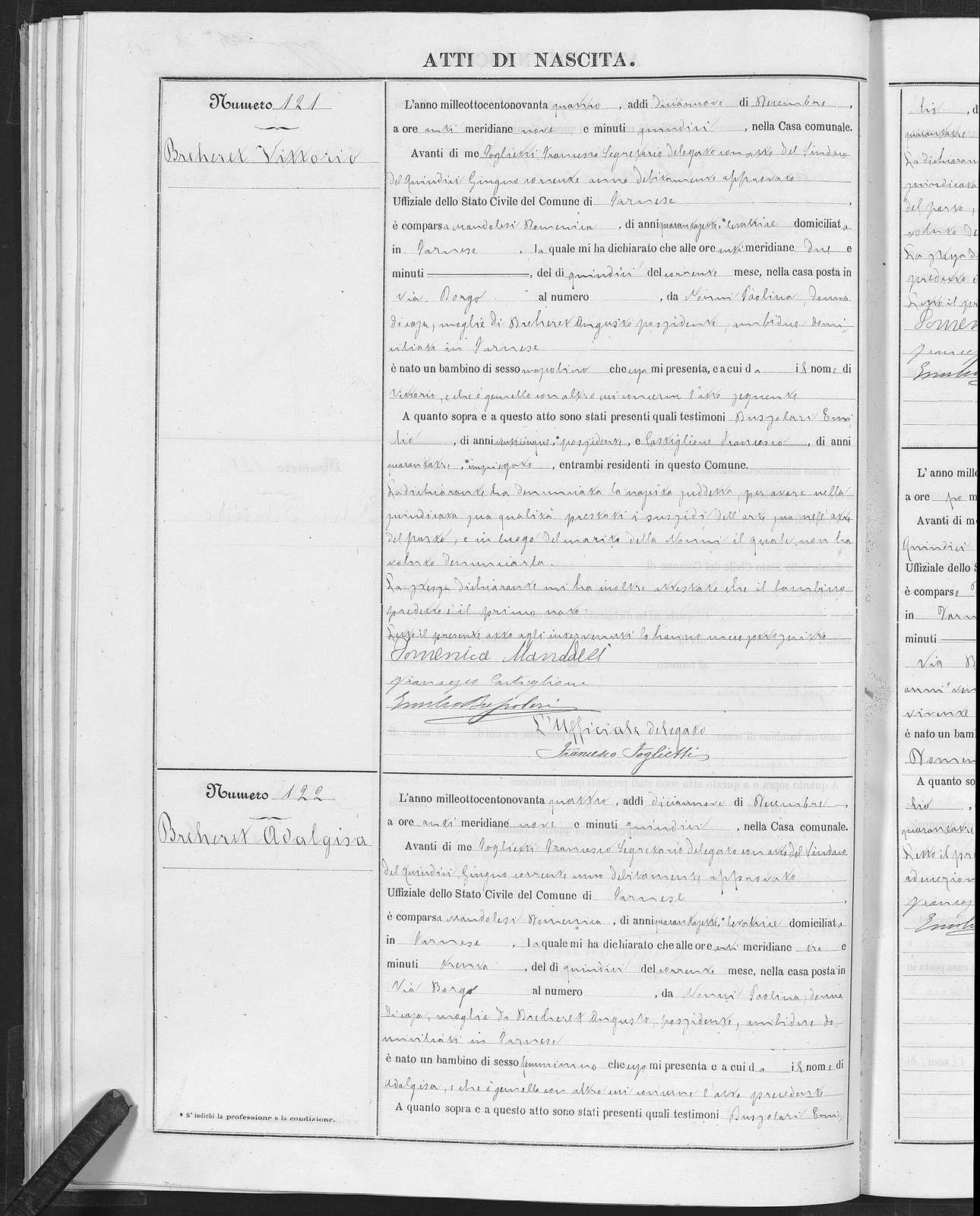
This is a way to ask for a copy of an ancestor’s birth act for your family history. You confirm the person and the comune, you look at the free register images first, and you write to the Ufficio di Stato Civile only for what those images do not show. You ask what the copy costs. You pay when the office has named the amount and the method.
The office decides whether it answers, which form it uses, and what it charges. These steps do not say which paper any office wants for a court or a consulate. Ask that office. Stay here for the genealogical copy.
The act itself, and how to read it, is covered on Italian birth records. The series it belongs to is covered on stato civile.
The words for the document
Four terms get mixed up in letters. They are defined on the glossary page.
The atto is the entry in the register. The estratto is an extract. The certificato is a certificate, often shorter. The copia integrale is a full copy of the act. For family history, ask for the full copy or an extract, and say per ricerca genealogica.
You do not choose the form the office issues, and you do not put a price in the letter. There is no single fee to quote. Ask, and wait.
Step 1. Confirm the person and the comune
One letter, one person, one birth. Write the last name and the given names as they appear on the best record you have, not as the family spells them now. Add the father’s name and the mother’s surname. Add a year or a tight range. Add the spouse if the birth year is vague and the marriage will help a clerk tell two cousins apart.
The place has to be the comune that kept the register. A region is too big. A hamlet is often a frazione inside the comune. The hometown guide is the test. Keep a second spelling if the only one you have is from a passenger list. Ellis Island lists, naturalization files, and the beginner guide are where that string usually comes from.
Put this on a worksheet before you look for an address. A letter from memory drops the mother’s last name, which is how the clerk finds the act.
Step 2. Check Antenati and FamilySearch first
The Portale Antenati publishes stato civile from the state archives. The Istituto Centrale per gli Archivi states that access is free and that registration is not required. If the birth year for your comune is in the listing and the image is readable, you already have the register entry. Cite it. For family history, that image is the act. A letter asking the comune to photocopy a book that is already on the portal wastes their time and yours.
The portal’s research guide describes the tools. Cerca per nome works when the register is indexed. Cerca nei registri and Esplora gli Archivi browse a year that was never indexed. The Antenati walkthrough and the name-search page cover a name filed under the mother or a second given name.
Then check FamilySearch with the FamilySearch Italy guide. Many of the same volumes are there because of the 2011 digitization agreement between the Direzione generale Archivi and FamilySearch. The catalogs are not mirrors.
Date ranges only tell you which series to open. Napoleonic civil registration, as a general rule, is about 1806 to 1815 in some areas. The Kingdom of Naples introduced that style in January 1809 and reintroduced it in 1816. Sicily’s start was 1820. Unified registration is generally from 1866, and the province of Rome from 1871. The comune’s volumes control. Read the listing.
Also search the marriage allegati if you know the wedding. A copy of the birth may already be sitting in the marriage packet. For a year before the civil books, the right letter is to the parish, on the church records page, not to stato civile.
Step 3. Identify the Ufficio di Stato Civile

Plaza and church of San Francesco di Paola, Naples. Photochrom Print Collection, Library of Congress, between 1890 and 1900. Public domain.
The office that issues a civil birth copy is the Ufficio di Stato Civile of the comune. Use the address the comune publishes for that office, on the comune’s own website. Send one request, and save the page address and the date. Offices change inboxes.
You are writing to that office, not to the region and not to the parish. The not-online guide covers a year whose holder is unclear. Older books are often at the Archivio di Stato. Newer ones are often still at the comune. The cutoff is local. Ask which is true for this year.
Step 4. Use the letter template
The wording to send is on the letter to the comune. Keep these elements, in Italian if you can, or with the Italian template even if your own note is short:
- Your name and the address or email where a reply should come.
- The ancestor’s name, parents, and approximate year of birth.
- The comune, and the frazione if you know it.
- The statement that the copy is per ricerca genealogica.
- A request for a copia integrale or an estratto.
- A question: do you hold this act, what is the fee, and how should I pay?
Ask for one act. If you want siblings, search those years yourself or send a later letter about a named person.
Say which series and years you already checked on Antenati. Otherwise a clerk may point you back to a portal you have already finished.
Step 5. Ask the fee, and do not pay early
The office sets the fee and the form. Wait for the reply that states both. Pay by the method they name. Do not send cash in the first envelope. Do not send a payment you calculated yourself. If the reply is unclear, ask one follow-up question about the amount and the method, and wait again.
A refusal of a recent act is that office’s rule. A fee you do not want to pay is also a complete answer. You can stop, and you can go back to a register image you already have.
If they say the volume is at the Archivio di Stato, move the search. Open Antenati again, then write to that archive with the same facts. Do not send the same letter back to the comune.
Step 6. Track the reply
On the worksheet, record the date, the address, the person, and the year. When the reply comes, record what they hold, the fee as they stated it, and the payment method. After you pay, record the date you paid and the date a copy arrived. If nothing arrives, one follow-up to the same office is enough. Then wait.
File the office copy next to any Antenati image. Margin notes can differ. The reading guide is what to extract next. The kit holds the letter, the glossary, and the worksheets. You still check the portals before you mail anyone.
A practical checklist
- One person, one comune, parents’ names, a year or a range, written down.
- Antenati browse of that year, including the ten-year index and the act, not only a name search.
- FamilySearch browse of the same comune and year.
- Marriage allegati, if you know the wedding and the birth year is the thing you lack.
- The stato civile address from the comune’s own site.
- The template letter, sent once, asking for a genealogical copy and asking the fee.
- Payment only after the amount and the method are in their reply.
- A log of every date. A second letter only as a follow-up, or as a new letter to the archive they named.
Invented example
The family and the town in this section are invented.
You want the birth of Anna Greco, about 1859, daughter of Salvatore Greco and Rosa Vitale, in the invented comune of Castelnovo del Colle. On Antenati the Restoration births for that town run only to 1856. FamilySearch has the same end date. There is no act to download. You have already checked her daughter’s marriage packet and it did not include Anna’s birth, only Anna’s name.
You find the Ufficio di Stato Civile address on the invented comune’s website and you send the template. You name Anna, her parents, and the range 1857 to 1861. You write that you already checked Antenati through 1856. You ask for a copia integrale or an estratto, per ricerca genealogica. You ask whether they hold the act, what the fee is, and how to pay. You enclose no money.
The reply says the births from 1857 are still at the comune, names a fee, and names a payment method. You record their figure and pay only by their method. A copy arrives: act 41 of 1859. You cite it, and you note that the portal listing stopped at 1856 when you looked.
If you had declined the fee, you would still file the reply. If they had named the Archivio di Stato, you would have searched that archive instead. The worksheet is what you will trust six months later.
Sources
Questions readers actually ask
Do I need to write to Italy if the birth is already on Antenati?
Not for ordinary family history. Save the register image and cite the archive, the comune, the year, and the act number. Write to the comune when the year is missing, the page is unreadable, or you want the office's own copy.
What words should I use for the copy?
Ask for a copia integrale or an estratto per ricerca genealogica. Those are a full copy of the act and an extract. The office chooses the form it will issue and the fee. This guide does not choose them for you.
What if the comune says the book is at the state archive?
Stop asking the comune to search that year. Look up the volume on Antenati and, if it is not listed, ask the Archivio di Stato. The handover between town hall and archive is local, so use the reply as your finding aid.