
Getting started
How to find an ancestor's hometown in Italy
How to turn a garbled town name into an Italian comune: compare records, drop the port, and check a gazetteer.
Affiliate disclosure.Some links on this page go to genealogy companies. If you buy through them, we may earn a commission, at no extra cost to you. We recommend a site only where it helps this kind of research. Read the full affiliate disclosure.
The hometown is a comune, the Italian municipality that kept the civil register, or the comune that contains the hamlet where the family actually lived. It is not a region, not a port, and not a last name. Most of the work of finding it happens outside Italy, in the records created after someone left. This page is the procedure for turning a garbled place string into a municipality you can open on Antenati. The beginner guide is the wider sequence. Stay here until the place is real.
Write every string on the worksheet exactly as the document spells it, with the document named beside it. A blank is allowed. A guess written as a fact will send you into the wrong province, and the wrong province looks like a missing family.
Compare two independent records
One spelling is a rumor the clerk heard. Two records that name the same person are a test. Choose two that were not copied from each other. A passenger list and a naturalization petition are independent if the petition was not filled out by someone staring at the list. A death certificate and an obituary may not be independent if the same child spoke to both the clerk and the newspaper. A sibling’s list is often the best second source, because the sibling dealt with a different clerk on a different day and may have said the town more clearly.
Compare given names, ages, a spouse, and parents if you have them, so you know the two documents are the same household. Then compare the place strings. If they match, even roughly, you have a candidate. If one is a short form of the other, keep the longer form. If they conflict, keep both and do not average them. “San” plus a different saint is not a match. A shared province is not a match.
The Ellis Island and New York passenger lists are one place the first string appears for a New York arrival. Other ports and other decades exist. The history page explains why a story about Ellis Island is not a year. Use the list you actually have, not the station you expected.
Separate the port from the town
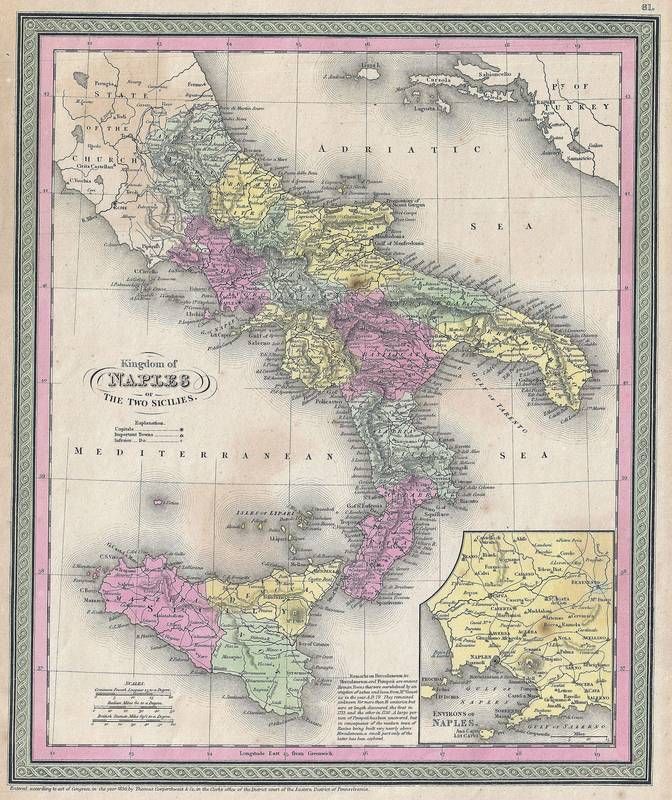
Italian passenger lists, and the American forms copied from them, often show a port of departure that later generations promote into a birthplace. Napoli is the usual example. Palermo and Genoa work the same way. The port explains the ship. The last residence, or the birthplace column, is the candidate for the hometown. When a later document collapses both into “Naples,” go back to the list and read every column, including ditto marks. The Campania guide is the full warning for Napoli as city, province and harbor. The Sicily guide does the same for Palermo.
Do this before you open an archive. The Archivio di Stato di Napoli holds the civil registers of the city and of the comunes filed with that archive. It does not hold the birth of everyone who sailed from the harbor. A Calabrian or a Basilicata town whose residents left through Napoli is filed in Catanzaro, Cosenza, Reggio Calabria, Potenza, Matera, or whichever archive matches the province. The port is not a shortcut to those shelves.
Tell a frazione from a comune
A frazione is a hamlet inside a comune. Families said the hamlet’s name because that was the place. The civil official wrote the act in the comune’s book. If you search Antenati for the hamlet and find nothing, you may be searching a name the catalog files only as a residence inside a larger town.
You cannot see the difference from the American spelling alone. “San Pietro” can be a comune, a frazione, or several of each. A gazetteer is the distinction. When the gazetteer calls your string a frazione of a named comune, search the comune. When you find the act, read the residence. The hamlet should appear there if you have the right household. A parish may still be in the hamlet, which is the path you use when the civil year is missing, not the path you use first.
The reverse mistake is also common. A string that is a full comune gets treated as a neighborhood of the provincial capital. Cosenza the city is not Cosenza the province. The Calabria guide and the regions hub keep those layers apart. Your worksheet should have a line for the hamlet, a line for the comune, and a line for the province. One word should not occupy all three.
Use a gazetteer
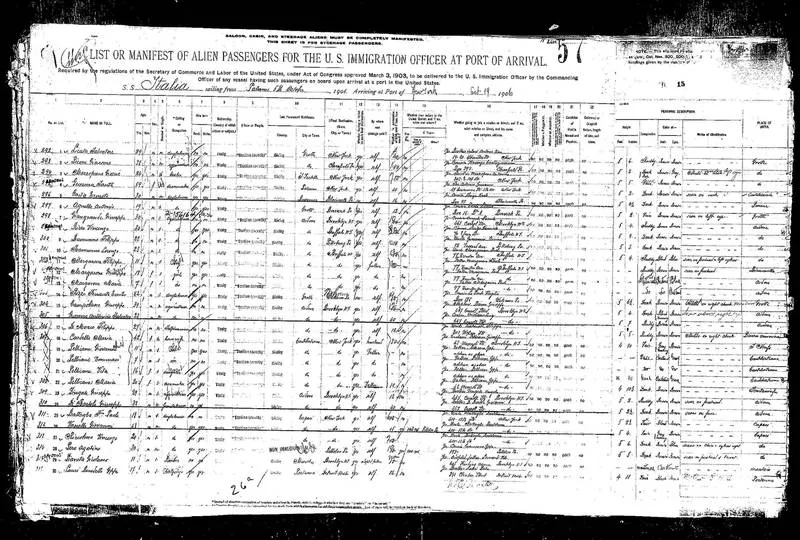
Ellis Island passenger manifest for a group recorded as Italy (South), including towns in Sicily. The file title says 1903; the Commons date field says 19 October 1906. Public domain.
The FamilySearch wiki page Italy Gazetteers is the pointer. Use a gazetteer that says whether a place is a comune, a frazione, or a former name, and that names the province. A driving map can show you a dot and still not tell you who kept the register. A last-name map is not a gazetteer at all. The distribution guide explains why a telephone-directory cluster is only a place to look.
Search the spelling from the document, then a normalized spelling. Try San, Santa, S., and the unabbreviated saint. Try double consonants and single consonants. Try the older name and the newer name. Enna and Castrogiovanni are the same comune under two names. Basilicata and Lucania are the same region under two names, and Lucania is not a town, which the Basilicata guide explains. Agrigento and Girgenti are the same city under two names. If one form is empty, try the other before you invent a different place.
Reject a candidate that only matches because it is famous. A clerk’s “Reggio” can be Reggio Calabria or Reggio Emilia. The second document, or the word Calabria, or a neighboring town, has to decide. Two famous cities are not an invitation to browse both for a last name.
Name the province, then the archive
The gazetteer gives you a province. The province points at a state archive. Catalogs on Antenati are lists of archives, reached through Esplora gli Archivi. You open the Archivio di Stato that matches the province, then the comune, then the year. Do not invent a website hostname for the archive. The Ministry’s portal at archivi.cultura.gov.it is the other front door.
Watch for provinces that are newer than the records. Crotone and Vibo Valentia were formed from territory that had been part of Catanzaro. If a town in one of those provinces is missing, search Catanzaro in the catalog. The Calabria page states that rule and does not date the change. Pescara is a newer province in Abruzzo. The Abruzzo guide explains the split custody described in the state’s own guide to the archives, including towns whose earlier civil acts are still associated with L’Aquila, Chieti or Teramo. Older English text says Abruzzi. Search the regional word you were given and the regional word the catalog uses.
FamilySearch’s overview of important Italian research resources dates the general ranges you will meet once the province is known. Kingdom of Naples civil registration runs from 1809 in that overview, with a Bourbon continuation from 1816. Sicily’s civil registration of that style begins in 1820. Unified civil registration begins generally in 1866. The ranges tell you which series you hope to enter. They do not confirm the town. The town is the gazetteer’s job.
Only then open Antenati
With a comune and a province, use the portal’s research guide. Name search works when the register is indexed. Browsing the year is the ordinary path, and it is the path to use when a name search fails. The Antenati walkthrough matches those tools. Repeat the search in the FamilySearch catalog. Some images are open with a free account and some are limited to a FamilySearch Center or an affiliate library. A lock means you have not finished. It does not mean the gazetteer was wrong.
Read the act, not only the index. Parents, ages, occupations and the residence are how you prove the household. The mother’s last name is how you leave the paternal line. If the residence names a different hamlet from the one you searched, stop and reconsider. You may have a namesake.
A paid index can surface a second place string. It is optional, and it still has to go through the gazetteer. The website comparison keeps subscriptions in that role.
When the candidates will not collapse
If two sources still name two comunes after you have ruled out ports, frazioni and old names, you have a conflict, not a hometown. Look for a third record type before you write a letter. A marriage in the country of arrival, a child’s birth record that names the father’s town, a sibling, a military draft card: one of them may side with one candidate. The kit is a set of letter templates and logs for the moment you do write, about one event in one town. It is not a way to ask five offices whether a last name sounds familiar. Until a source agrees, the honest status is unresolved. Write it down that way, so a later session does not treat a town you never proved as if you had confirmed it.
Invented example. A manifest says last residence “Aci Trezza” and port of departure Palermo. A petition for the same man, matched by age and by his wife’s last name, says he was born in “Aci Castello, Catania.” A gazetteer identifies Aci Trezza as a frazione of the comune of Aci Castello, in the province of Catania, on Sicily. The port is not the birthplace. The hamlet is where he said he lived. The civil register to open is the comune’s, in the Archivio di Stato di Catania, which you reach from Esplora gli Archivi. You do not create a separate Antenati search for the hamlet and then conclude the birth was never registered. You also do not search the city of Palermo. If the petition had said Acireale instead, you would have had two neighboring comunes, not a hamlet and its municipality, and you would have kept both until a third document chose. Acireale is not a spelling of Aci Castello. The gazetteer is what keeps those apart.
That is the whole craft. Compare two records. Drop the port. Learn whether the string is a frazione or a comune. Confirm the province, including the old name and the newer provincial filing. Then, and only then, browse the year. The regions hub is there if the province is one this site has written about. The registers are there either way.
Sources
Questions readers actually ask
What if every document says only Naples or Sicily?
Then you do not have a hometown yet. Naples is often the port of departure, and Sicily is a region. The city of Napoli, the province of Napoli, and the harbor are three different things, and a Sicilian port such as Palermo has the same problem. Keep looking for a second record that names a smaller place: a sibling's passenger list, a petition, a marriage record, an obituary. Compare the two instead of enlarging the first word into a search of the whole port city. The Campania and Sicily guides explain the archives once a comune appears. A last-name map can suggest provinces to watch for, and it cannot supply the missing town. Do not write to an office with only a region and a last name.
How do I tell a frazione from a comune?
A frazione is a hamlet or a subdivision inside a comune. The comune is the municipality that kept the civil register. People lived in the hamlet and may have said its name when a clerk asked where they were from. The birth act was usually written among the comune's births, and the residence line inside the act may name the hamlet. A gazetteer is the tool that applies the label. The FamilySearch Italy Gazetteers page points you at gazetteers that make this distinction. If the gazetteer calls your string a frazione of a named comune, search that comune on Antenati. If it calls the string a comune in its own right, search the string itself. A parish may still sit in the hamlet, which matters only after the civil year is missing.
Two records name two different towns. Which do I open?
Open neither as a settled fact. Write both, look each up, and see whether one is a frazione of the other, an old name of the other, or a genuine second place. Old names such as Castrogiovanni for Enna, or Lucania for the region of Basilicata, are spelling problems, not two towns. A port beside a village is not two towns either. If the gazetteer says you truly have two comunes, do not merge them because they share a valley. Look for a third record, a sibling or a marriage, before you write to an office. Browse the one that two independent sources agree on. If nothing agrees, your log should say "unresolved," which is a better result than a year spent in the wrong archive.