
Books and history
Italian immigration to America
A cautious history of Italian emigration to America: New York stations, other ports, and the records that name a town.
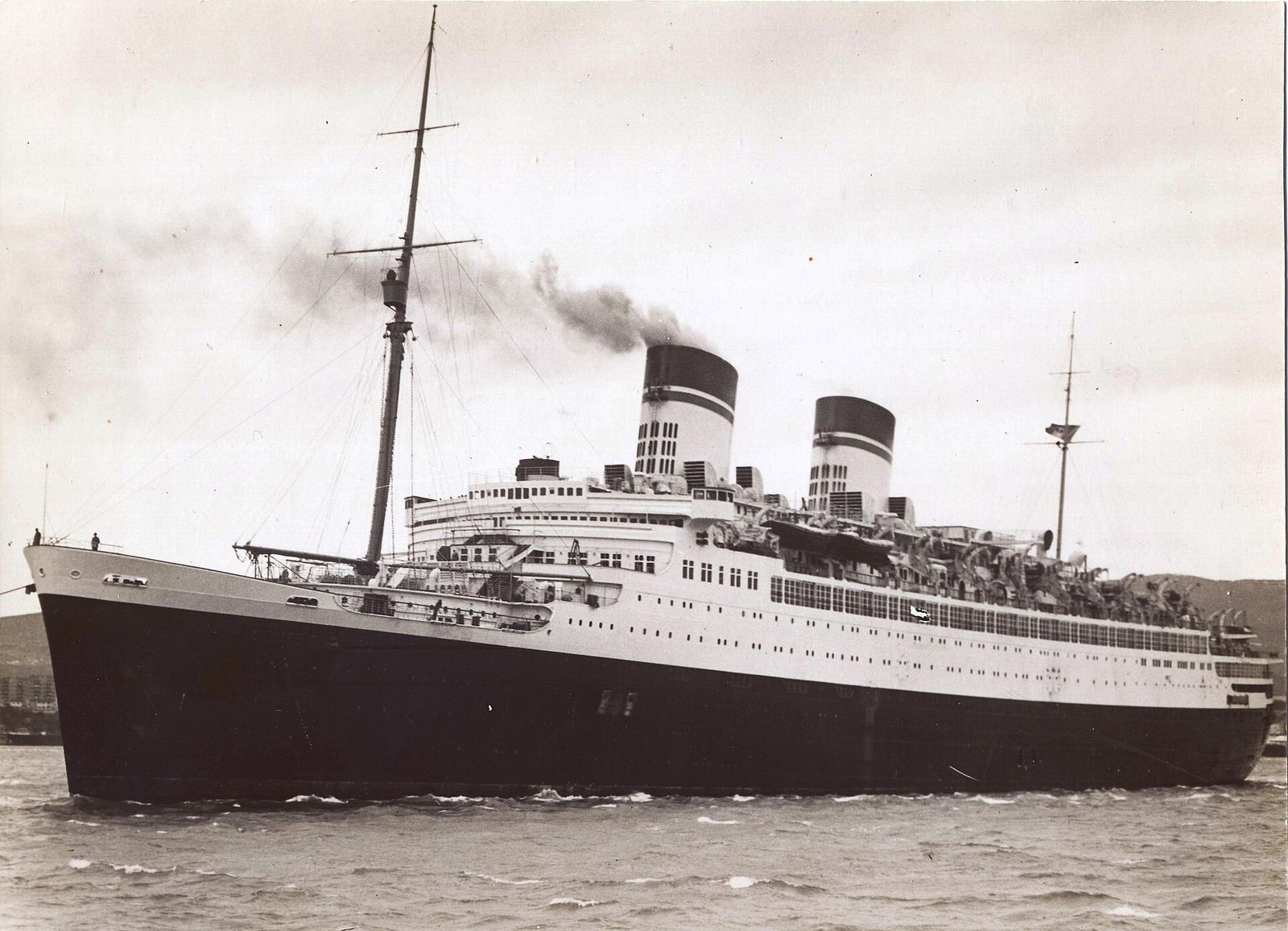
Italian immigration to America is a family-history subject with a famous building attached to it. The building is Ellis Island. The subject is larger. People left the Italian peninsula and Sicily toward the Americas across the nineteenth century and the early twentieth century. They left through several ports, they arrived at several ports, and they did not all leave in the decade a grandchild remembers. This page keeps that history qualitative. It does not cite a number of immigrants. A number would sound precise and would not help you find a town. The records that name a town are the point.
The immigration records guide is the United States research order. The emigration records guide is the reminder that Italy did not keep one nationwide register that replaces the arrival list, and that many families went to Argentina, Brazil, Canada, Australia and elsewhere rather than to the United States. This page is the context those guides assume. It is not a second copy of their search instructions.
A long movement, told without a headcount
Mass emigration from the Italian peninsula toward the Americas is a nineteenth- and early-twentieth-century subject. That is the period to keep in mind when a story says “they came over” and does not say when. Inside that period the reasons people give are the ordinary ones of family history: work, land that would not support another household, a brother who had already gone, a trade that paid better in a city abroad, a return trip that became permanent, a return trip that did not. This page will not rank those reasons or assign a share of the movement to each. Shares are statistics. You do not have them from a grandparent’s sentence, and you do not need them to identify a person.
What you do need is the pattern the records actually show, one family at a time. People from the same town often turn up in the same American city, because a brother sent for a brother. That is chain migration as a research method, not as a sociology chapter. If your immigrant’s list has no town, a sibling’s list or a cousin’s petition may have it. The chain is a reason to search the people who traveled with him or who received him, not a reason to assume every person of the last name in that American city is a relative.
Some people went back. A man can appear on an outbound story and on a later arrival, or he can disappear from American records because he left. A gap is not proof of a death, and a second arrival is not proof of a second identity. Compare ages and companions. The passenger-list guide shows how much of that comparison depends on reading the image rather than the index.
Women’s names change shape between the Italian act and the American list. In the civil register a woman keeps her last name. On a manifest she may be listed under her husband’s. When you are matching a family across the voyage, match the given names, the ages and the children, and then recover her last name from the Italian act or from a marriage record. The history of the migration is full of households. The index is full of surnames that hide the mother.
New York had more than one station
Ellis Island served as the New York immigration station from 1892 to 1954. Use that span the way the Ellis Island guide uses it, and the way the National Archives’ immigration overview frames passenger arrivals: as the years of that station, not as the years of Italian immigration. The Statue of Liberty—Ellis Island Foundation’s pages on the island are the public history of the site. A passenger processed there may appear in the Foundation’s arrival search. A passenger who arrived at New York earlier was not processed there.
Castle Garden, the station at Castle Clinton, served from 1855 to 1890. The National Park Service documents the site at nps.gov/cacl. The Castle Garden guide explains what those earlier lists tend to include and what they tend to omit. An early list may give a name, an age and a country, and withhold the Italian town. That is a property of the form, not a sign that the person had no town. The years between the two stations are a seam, not a third famous island. If an arrival falls in that seam, search the New York lists for the year and let the Castle Garden page keep you from forcing the story onto the wrong building.
Relatives say “Ellis Island” for landings that the dates will not allow. Test the date against the station. An arrival in the Castle Garden years, 1855 to 1890, is not an Ellis Island arrival if it was New York at all. An arrival in the Ellis Island years, 1892 to 1954, can still be Boston, Philadelphia or another port. The memory of the famous station spread because the station was famous. Fame is not a manifest.
Other ports, other decades, other countries
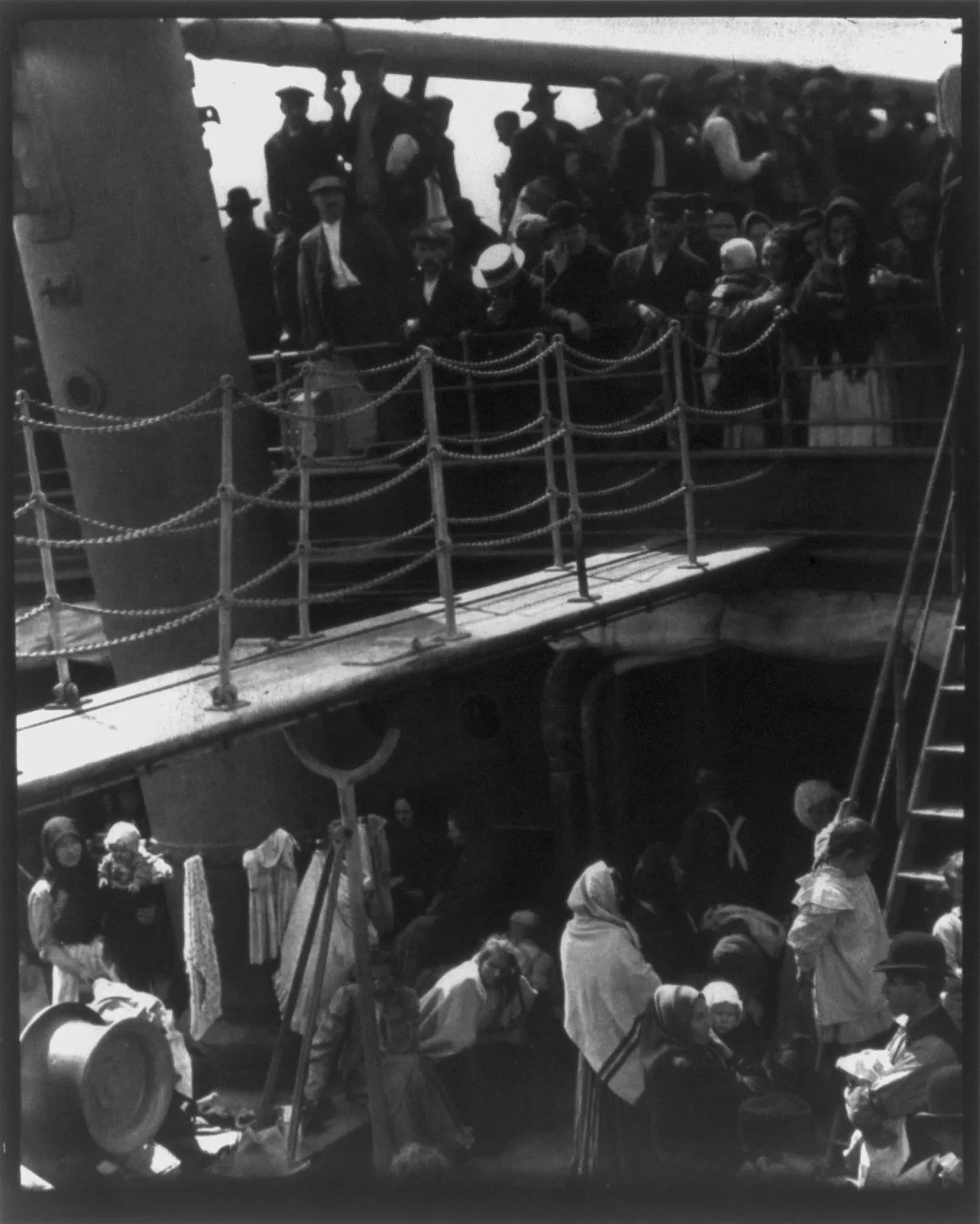
The Steerage, photographed in 1907 by Alfred Stieglitz. Library of Congress photogravure, LCCN 2003653258. Public domain.
Many Italians arrived at other United States ports and in other decades. Philadelphia, Boston, Baltimore, New Orleans and the smaller ports each produced lists. The National Archives overview is the map of which lists the federal government holds. A family story that names a railroad or a mill town is a clue to the port only if someone also named the port. Do not infer Boston from a job in Massachusetts without looking. People moved after they landed. The first census you find may be a second city.
Other decades matter as much as other ports. A family that left in the middle of the nineteenth century is not an Ellis Island family. A family that left after the island closed as an immigration station is not an Ellis Island family either. The emigration guide is where you go when the destination was not the United States. Argentine, Brazilian and other arrival records are a different set of archives, and a last-name map of Italy will not tell you which country someone chose.
The port of departure is a separate confusion, and it belongs in this history because the history is what taught Americans to say Naples. Ships left Napoli, Palermo, Genoa and other harbors. The harbor is not the birthplace. Campania, Sicily and Liguria each have to be earned by a residence column or a later document. The hometown guide is the procedure. This history only insists that you keep the harbor in the voyage sentence and the town in the birth sentence.
Naturalization is part of the same story
A declaration or a petition is a record of someone settling, or at least of someone asking a court to treat them as settled. After the federal forms became more detailed, many petitions asked for a birthplace and an arrival. The naturalization guide is the how-to, and the National Archives explains the federal records on its naturalization page. Not every Italian immigrant filed. Not every filing names a village. A person who arrived, worked, and never filed is still an immigrant in this history. The absence of a petition is not the absence of a life. It is the absence of that document, and you use the census, the ship and the death record instead.
When the petition and the manifest disagree about the year of arrival, keep both. People misremembered. Clerks misheard. A second voyage is possible. The history of return trips is the reason not to “correct” the petition until you have read both images.
One local museum, clearly not this site
The Museo dell’Emigrante in Roasio, in the province of Vercelli, is one local museum concerned with emigration. Its site is museoemigranteroasio.com. This website is not the museum. This page does not claim to know who runs it, and it does not send you there for a passenger index. A local museum is a place a community interprets departure. Roasio is in Piedmont, which is a reminder that emigration was not only a southern story, even though so many American searches begin in the south. If you want the museum, use the museum’s site. If you want a town of birth, use a list and a civil register.
There is no single American museum that holds the hometown of every Italian immigrant, and this page will not invent one. Archives hold records. Museums hold interpretation. Both can be worth your time. They are not substitutes.
What the history changes about a search
It tells you which station is even possible, once you have a year. It tells you to expect chain migration, so you search the brother. It tells you to expect the port to be remembered and the village to be forgotten, so you read every column. It tells you that a southern story and a northern document can both exist in one family, because the peninsula is large and because people married after they arrived. It does not tell you the comune. The beginner guide starts where this page stops: with one person, one document, and a place string you are willing to test instead of memorize.
Invented example. A granddaughter says her grandfather “came through Ellis Island from Naples as a young man.” The death certificate places the birth early enough, in the nineteenth century, that a youthful New York arrival would fall in the Castle Garden years or before them, and the death falls long after 1892. You do not solve that in the abstract. You look for a petition, using the naturalization guide, and for a passenger list in the decade that petition names. If the port is New York and the year falls in 1892 to 1954, use the Ellis Island guide. If the petition claims an earlier New York arrival, use the Castle Garden guide. “Naples” stays a port until a residence column says otherwise. The people in this example are not real.
The history is the reason her sentence took that shape. Ellis Island is the station Americans remember. Naples is the port they remember. The young man is a role. The records are allowed to disagree with the role. When they do, follow the records into a comune, and let the sentence remain what it was: a memory of a migration, not a catalog entry.
Sources
Questions readers actually ask
Did all Italian immigrants to America pass through Ellis Island?
No. Ellis Island was the New York immigration station from 1892 to 1954, which is the span used in the National Archives' discussion of passenger arrivals and on the station's own historical pages. It is part of the story, not the whole story. Castle Garden, also called Castle Clinton, was the New York station from 1855 to 1890, as the National Park Service documents for that site. Many Italians arrived at other United States ports and in other decades. Boston, Philadelphia, Baltimore, New Orleans and others each kept lists. Some families arrived before either New York station, and some arrived after Ellis Island closed as an immigration station. A relative who says "Ellis Island" may mean New York, or may mean America. The passenger-list guide and the Castle Garden guide are how you test the sentence against a year.
Where is the hometown written down?
Usually in a record created after the person left, and sometimes in a record created at home. A passenger list may show a last residence or a birthplace, and it may show only a port. A naturalization petition or declaration can repeat the town more clearly than the manifest, which is why the naturalization guide sits beside the passenger guides. An obituary, a marriage record or a sibling's list can name the village when the first immigrant's line does not. The Italian civil register is where the birth was written, but you open it only after you know the comune. This history page will not give you that comune. The hometown guide will, once you have a string to test. Mass emigration from the peninsula toward the Americas is a nineteenth- and early-twentieth-century subject. That sentence is the period. It is not a count of people.
Is the Museo dell'Emigrante the same as this website?
No. The Museo dell'Emigrante in Roasio, in the province of Vercelli, is one local museum, with its own site at museoemigranteroasio.com. This website is not the museum. This page does not say who runs the museum, what it exhibits this year, or whether a visit answers a genealogical question. A local museum can be a place to understand how a community remembers departure. It is not a national index of passengers, and it is not a substitute for a manifest or a civil act. If you go, use the museum's own site for practical details. If you are hunting a town, use the records named on this page. Confusing a museum with an archive is how a family story stays a story.