
Letters and document types
Letter to an Italian comune
A formal Italian letter and English translation asking a comune for one birth, marriage, or death copy for family history.
Updated · Matteo Micheletti · 8 min read
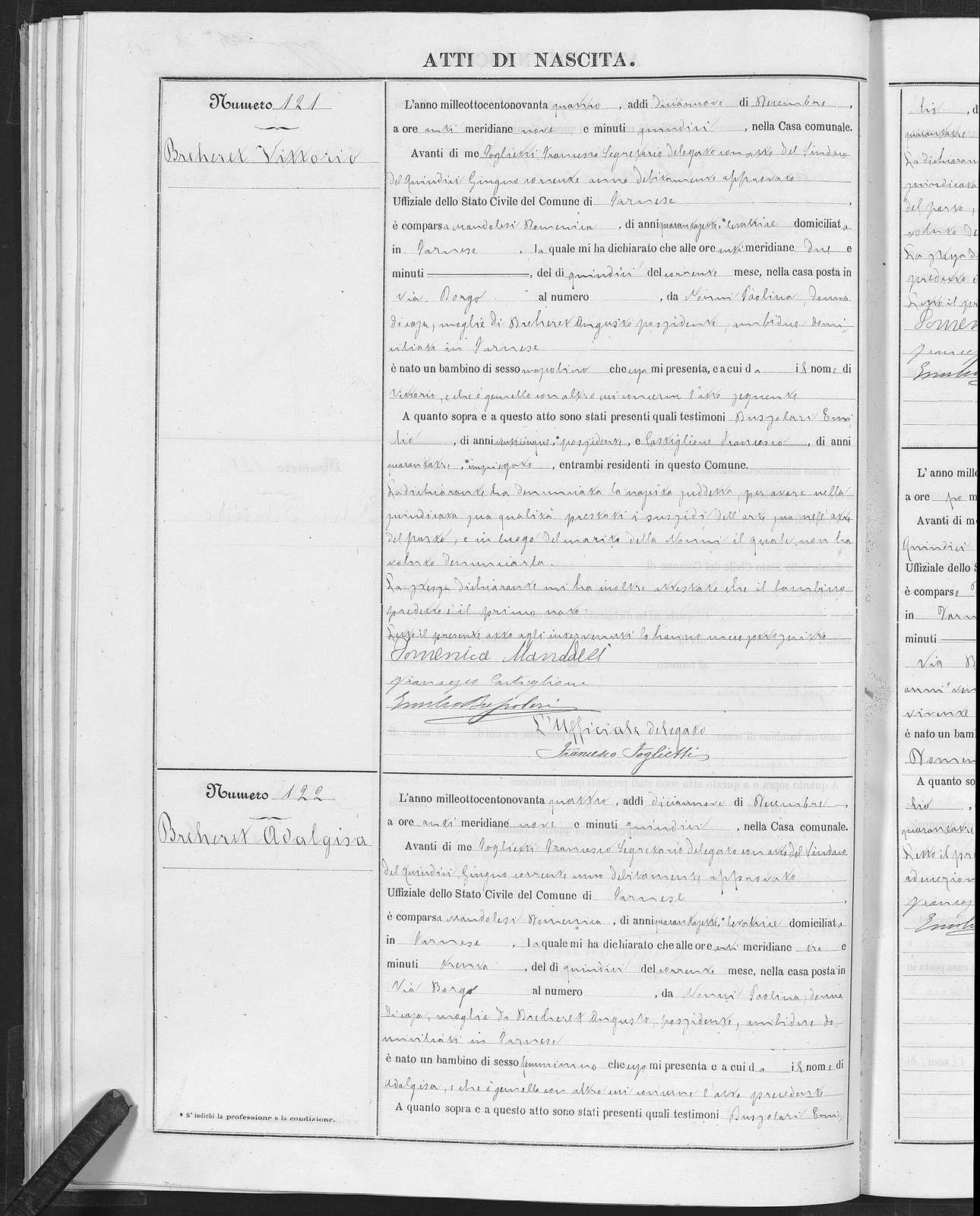
Write to a comune when you already know which municipality should hold one birth, marriage, or death, and you have checked the free images for that year. The not-online guide is the test for whether a letter is premature. The Portale Antenati and FamilySearch are the places you check first. A letter is how you ask for the gap. It is not how you ask a clerk to reconstruct a last name.
The request in the letter below is for ricerca genealogica and storia familiare: genealogical research and family history. It asks for one act. It asks the office to say what the copy will cost and how they want to be paid. It does not demand a particular legal form. Some offices answer with a full copy, some with an extract, some with a short certificate, and some with a note that the register is in the state archive. The glossary of atto, estratto, and certificato is how you read whichever word they use.
The Italian letter
Replace every bracket. Leave a bracket empty rather than guessing a parent’s name. Send the letter in Italian. The English text under it is for you, so you know what you signed.
Ufficio di Stato Civile
Comune di [Nome del comune]
[Via e numero]
[CAP] [Comune] ([Sigla della provincia])
Italia

[Città del richiedente], [data]

Oggetto: richiesta di copia di un atto per ricerca genealogica e storia familiare

Spettabile Ufficio di Stato Civile,

mi chiamo [Nome e cognome del richiedente] e sto ricostruendo la storia della mia famiglia. Scrivo per chiedere, se l'atto è conservato presso il vostro ufficio, una copia di un solo atto, per ricerca genealogica e per storia familiare.

Tipo di atto: [nascita, oppure matrimonio, oppure morte]
Nome e cognome della persona: [Nome e cognome]
Nome del padre: [Nome del padre]
Nome e cognome della madre: [Nome e cognome della madre]
Data, anche approssimativa: [giorno, mese e anno, oppure un intervallo di anni]
Luogo indicato nei documenti della famiglia: [comune, frazione o altra indicazione]

Non chiedo una forma particolare. Se possibile, gradirei una copia che riporti il testo dell'atto e le annotazioni a margine. In ogni caso accetto la forma che il vostro ufficio usa per le richieste di storia familiare. Vi prego di indicarmi quale copia rilasciate, il costo, e la modalità di pagamento che preferite. So che alcuni uffici chiedono un modulo proprio oppure un metodo di pagamento scelto dall'ufficio. Attendo le vostre istruzioni prima di inviare qualsiasi somma.

Se l'atto non si trova presso di voi, vi sarei riconoscente se poteste indicarmi l'archivio o l'ufficio a cui rivolgermi.

Resto a disposizione per qualsiasi chiarimento.

Distinti saluti

[Nome e cognome del richiedente]
[Indirizzo postale completo, con lo Stato]
[Indirizzo di posta elettronica]
English translation
Send the Italian text, not this translation. The translation is so you can fill the brackets honestly.
Civil Registration Office
Municipality of [name of the comune]
[street and number]
[postal code] [comune] ([province abbreviation])
Italy
[your city], [date]
Subject: request for a copy of one record for genealogical research and family history
Dear Civil Registration Office,
my name is [your full name], and I am reconstructing my family's history. I am writing to ask, if the record is held in your office, for a copy of a single record, for genealogical research and for family history.

<p class="figcap">Plaza and church of San Francesco di Paola, Naples. Photochrom Print Collection, Library of Congress, between 1890 and 1900. Public domain.</p>
Type of record: [birth, or marriage, or death]
Person's given name and last name: [name]
Father's name: [father's name]
Mother's given name and surname: [mother's name]
Date, even if approximate: [day, month, and year, or a range of years]
Place named in the family's documents: [comune, frazione, or other indication]
I am not asking for a particular form. If possible, I would prefer a copy that includes the text of the record and the marginal notes. In any case I will accept the form your office uses for family-history requests. Please tell me which copy you issue, the cost, and the payment method you prefer. I understand that some offices ask for a form of their own or for a payment method the office chooses. I will wait for your instructions before I send any money.
If the record is not held by you, I would be grateful if you would tell me the archive or office I should contact.
I am available for any clarification.
Yours sincerely,
[your full name]
[full postal address, including country]
[email address]Find the Ufficio di Stato Civile on the comune’s own site
The address belongs to the comune, and the page you trust is the one the comune publishes. Search for the municipality’s website. Domains are often along the lines of a comune name followed by .it. Ignore directory sites that scrape addresses until you have confirmed the same address on the municipal site. Offices move. A scraped address from an old travel page is how letters vanish.
On the site, look for Ufficio di Stato Civile, Anagrafe e Stato Civile, or Servizi demografici. Stato civile is the desk that holds birth, marriage, and death acts. Anagrafe is the population register. In a small town the same people may answer both. The menu label matters less than the sentence that says which office keeps the acts. Copy the postal address, including the CAP and the province, and copy the email address the page offers the public.
If your place name is a frazione, a hamlet, write to the comune that contains it unless the municipal site says the registers are somewhere else. The hamlet may have a church and no civil desk. The hometown guide is how you tell the hamlet from the municipality. If the old comune was merged into a later one, write to the comune that holds the registers now, and put the historic name in the blank for the place named in family documents. Say both names so the clerk can search the right series.
While you are on the site, save the URL and the date you read it into the record and correspondence log. The columns there are the date, the archive or site, the person and year, what you opened, and the result. “Address copied from the stato civile page” is a result. The kit describes a longer correspondence tracker if you want more rows than the free sheet prints.
Email, paper, and PEC
Ordinary email is appropriate when the office publishes an ordinary address. Write a short message, attach the letter as a file if you can, and paste the same text into the body so a clerk who does not open attachments still sees the request. Use a subject line that matches the oggetto of the letter. One act, one message.
Paper is appropriate when you cannot find an email address, when a message bounces, or when you simply prefer a letter. Address the envelope to the Ufficio di Stato Civile at the postal address on the municipal site. Put your return address on the envelope. Do not put cash or a payment inside. You do not yet know the amount or the method.
PEC is different. Posta elettronica certificata is a certified channel used between Italian offices and by people who have obtained a PEC mailbox. Send PEC only if you already have one and you know how to use it. A message from a regular inbox to a PEC address is not a certified message. Some systems reject it. Some offices ignore it. If you do not have PEC, do not stall the research in order to acquire one for a single family-history request. Use paper or the ordinary email. If the website lists only a PEC address, choose paper and note that choice in the log.
Do not attach extra forms the office has not named. Some offices ask for a form of their own, or for a payment method of their choosing, after they read the request. That is why the letter asks first. Wait for the answer. If they ask for a copy of an identity document, send what they ask for. If they name a fee, pay it the way they describe. If they name a form, use that form for the follow-up and keep your original letter in the file so you can see what you already told them.
How to log the reply
When an answer arrives, add a new row. Record the date, whether it came by post, ordinary email, or PEC, and what they offered. Quote the cost in the result column only after they have stated it. Quote the payment method in their words. If they say the act is at the Archivio di Stato, write the archive name and stop asking the comune to search that year.
Save a scan next to the row. Read the heading before you file the paper as the full act. A short modern certificate can be right about a date and still omit witnesses and marginal notes. The glossary explains the difference. If the paper names the parents and the date, transcribe it with the Italian word list. If it does not, write back once and ask whether a fuller copy of the same act exists and what it costs. Do not add a second person to that follow-up.
If they say the act is not there, log that and check the mundane causes. The year may sit in a volume you did not name. The mother’s last name may be missing, so two children cannot be separated. The saint’s name may belong to a different comune. The birth records page shows what a full act tends to contain. It does not mean the office must send every element you hope for.
What this sample will not do
The sample asks for one event. It will not search a last name or decide which copy suits a filing outside family history. A second event is a second letter, after you know this office answers. Clerks respond better to a person, a year, and a father than to a list.
The parish letter is for a baptism or a marriage in a parish book. Do not send the stato civile letter to a priest unless that priest has told you the book is there. The beginner guide keeps civil registers and church books apart. If you move while a request is open, send one address correction and nothing else.
Sources
Questions readers actually ask
Should I name estratto, certificato, or copia integrale in the letter?
Ask the office which copy it issues for a family-history request, and ask what that copy costs. The sample letter does that on purpose. A copia integrale is the full wording, and an estratto or a certificato is often shorter, but the office decides what it will send. Demanding one legal form is how a simple request turns into a correspondence the clerk did not ask for. If you already know you need the witnesses and the marginal notes for your transcription, the letter may say you would prefer a copy that includes the text and the notes, and that you will accept the form the office uses. Read the glossary page before you interpret the reply. The heading on the paper they send is the definition that counts, not the word you hoped they would use.
I do not have a PEC mailbox. Can I still write?
Yes. PEC, posta elettronica certificata, is a certified email system. You can send a true PEC message only if you already have a PEC mailbox of your own. This page does not assume you have one, and it does not tell you to rent one before you are allowed to ask for a record. Many comuni publish an ordinary email address for the public and a PEC address for offices. Use the ordinary address from your regular email, or send a paper letter to the postal address of the Ufficio di Stato Civile. If the only address on the page is a PEC address, do not pretend a message from ordinary email is certified. Send paper to the street address and say so in your log. A clerk may still read an ordinary email sent to a PEC inbox, and may also ignore it. Paper remains a valid request.
What do I do if nobody answers?
Check that you wrote to the comune that holds the registers, not to a frazione that has no stato civile desk, and that the address came from the comune's own website. Confirm the message did not bounce. Then wait. Offices answer on their own schedule, and this page will not invent a number of days that every comune owes you. One polite reminder, repeating the same single act and not adding a new list of relatives, is enough for a first follow-up. Log the date you sent it, the channel, and the date of the reminder on the worksheet. If the reply says the year is at the state archive, stop writing to the comune about that year and use the archive's finding aid or the images on Antenati. Do not send money until the office has stated a cost and a payment method.