
Vital records
Italian census records for family history
Why Italian censuses rarely leave a national name schedule, and how to check Antenati and the state archive before you assume a household sheet exists.
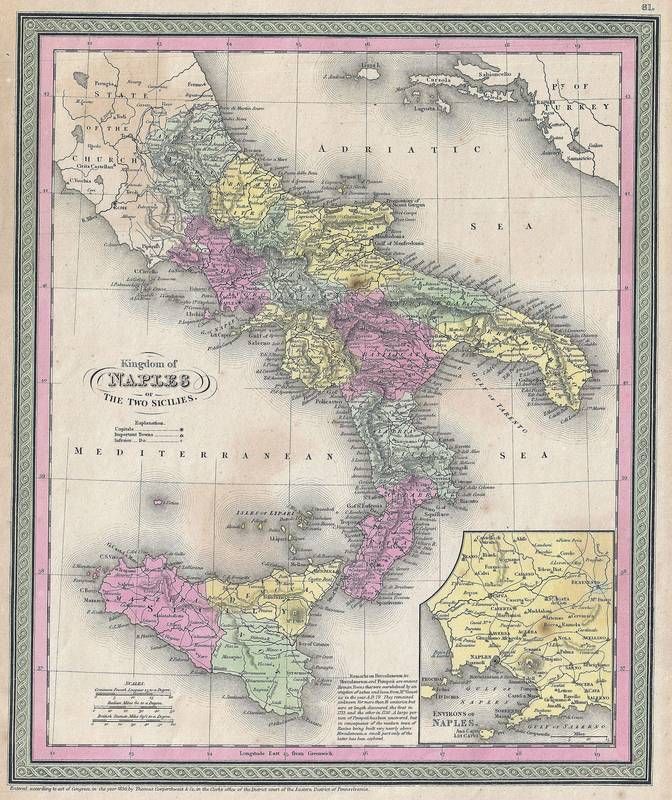
Italian census records disappoint people who learned genealogy on United States population schedules. Italy did take censuses. They were statistical counts. The nominative household sheets, the pages that would list every person in a house by name, were often not preserved nationally the way U.S. census schedules were. A decade you have seen attached to the word “census” is a year a count may have been organized. It is not a book of households you can open for an arbitrary town.
The FamilySearch Wiki page on Italy census is the place to read the archival background. This page is about what to do with that fact while you are holding a last name and a village.
A count is not a schedule
A statistical census exists to produce numbers: how many people lived in a province, how they made a living, how old the population was. Clerks could compile those numbers from household sheets and then destroy the sheets, return them, or keep them under a local rule that later changed. The published totals, when you meet them in a statistical volume, do not name your great-grandmother. They are not a defective index. They are a different kind of document.
Because preservation was local, one Archivio di Stato may have nominative sheets for some comuni and some years, and none for the town next door. A comune may have kept a copy its neighbor did not. Antenati may have digitized a set for one province and nothing that looks like a census for another. None of those outcomes lets you publish a list of “the years that survive” for a town you have not checked. This page will not list surviving census years for any specific town. Check the archive’s current listing. Then believe the listing.
If a blog names a census year and a province in the same sentence, treat it as a claim about that holding, and verify it in the archive’s own inventory. Holdings move onto portals. They also get described more loosely than the shelf warrants.
What a surviving sheet is worth
When a nominative sheet does survive, read the form in front of you rather than a generic column list. Household lists of this kind can show who lived together, how they were related to the head of the household, and an age or a year of birth, along with an occupation, if those fields were on that printing. A form from one decade is not a promise about the next. Copy the columns that exist. Leave the others blank on your worksheet.
A sheet is a snapshot. A son who was already in the army, a daughter who was already married in the next town, and a husband who was in the Americas may be absent. Absence from a household list is not a death. Pair the sheet with the civil acts. The birth, marriage, and death pages are the series that were built to record those events one by one.
If the only census-like list you can find is a parish stato delle anime, you have found a church household list, not a state census. It can still be the better document. The church records page explains it. Keep the two labels straight in your notes so you do not cite a parish visitation as a national count.
Where to check, without assuming a hit
Start with the Portale Antenati. The Istituto Centrale per gli Archivi names civil acts, liste di leva, and ruoli matricolari among what the portal publishes from the state archives. Census sheets are not in that short list. They appear only if a particular archive digitized them. Look in Esplora gli Archivi. If you do not see a census or a foglio di famiglia, stop typing the last name into name search. The Antenati walkthrough shows how to read that shelf.
Next, the Archivio di Stato for the province. Its own inventories and, where they exist, its own online catalogs are the finding aids. Ask, if you write, whether nominative census sheets survive for that comune, and for which years they hold. Ask them to name the years. Do not supply a year you hope for and push them to search only that year. The not-online guide is the tone to take: one place, one question, no cash enclosed until someone states a fee and a method.
The comune is the third address, not the first. A small office may hold local census material, or it may hold nothing and say so. The letter to the comune can be adapted to ask what they have. If they only have the civil registers, you have your answer. Go to those registers. They are the better source in any case.
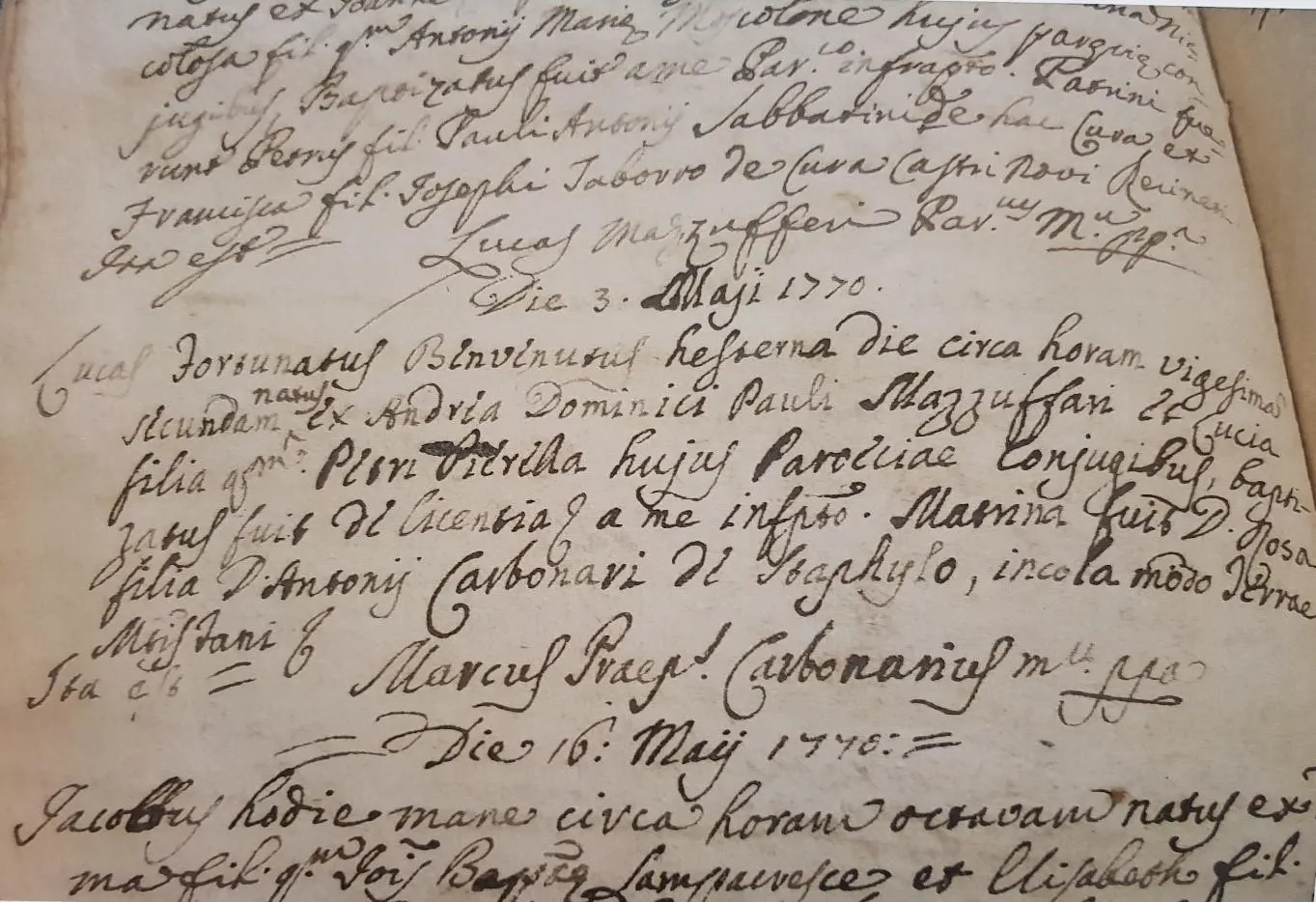
Baptism register for 1770, parish of Passatempo in Osimo. Photograph by GiuseppeLanari, 18 May 2023, CC BY-SA 4.0. CC BY-SA 4.0. Source.

FamilySearch’s catalog sometimes includes a census collection for an Italian place and sometimes does not. Search the place. Read the film notes. The FamilySearch Italy guide covers the catalog. A collection titled for one city does not extend, by optimism, to the villages of the province.
What to do instead
Build the household from the acts you can actually open.
Read births across the years a couple lived in the town. The civil records page is the method. You get the children registered in that comune, each with the mother’s last name.
Marriages show who left. A daughter missing from the births of her parents’ town may have married elsewhere. Search her husband’s comune.
For men, a conscription list can place a birth and a household relationship when the civil birth is hard to find. That is a military record, and it covers men called in a class, not the whole family. It is still more available, on Antenati, than census sheets are, because the portal’s stated holdings include the leva lists.
Parish books cover the years before civil registration and the religious life of the family after it. They are not a census substitute in form. They are the substitute in practice, because they name people.
United States censuses help after emigration. They are not Italian census records. The beginner guide, passenger lists, and naturalization files are how you find the town. An Italian census sheet, even when one survives, is a poor way to discover that town from scratch.
A practical search order
- Write down the comune and the province. If you do not have them, stop. A census search will not create them. Use the hometown guide.
- On Antenati, open the state archive and the town. Look for any register titled as a census, a foglio di famiglia, or a similar household list. Note the years in the listing and no others.
- Search the FamilySearch catalog for that place plus the word census. Read the coverage note on the collection. Do not extend it.
- If nothing is listed, write one question to the Archivio di Stato: which nominative census sheets, if any, do you hold for this comune? Leave the years blank for them to fill.
- If they name a year and a call number, read that set. Copy the household as printed. Cite the archive, the title, and the year they gave you.
- If they say nothing survives, record that answer, including the date of the letter, on your worksheet. Do not replace it with a year from a different town.
- Reconstruct the household from civil births and marriages, and from parish books where the civil series has not started.
- For the men, check liste di leva on Antenati. For the women, stay with the civil and parish acts.
Invented example
The family and the town in this section are invented.
A researcher wants “the census” for an invented comune, Marina di Sopra, because a grandfather’s story included a year. They type the last name Lanza and that year into Antenati’s name search. Nothing returns. They then open Esplora gli Archivi. The town’s listing shows births, marriages, deaths, and a conscription series. It does not show household sheets. They check the FamilySearch catalog for Marina di Sopra. There is no census collection. They are done with the census.
They write to the invented province’s Archivio di Stato and ask which nominative sheets, if any, exist for Marina di Sopra. The reply says the archive does not hold nominative census sheets for that comune. They file the reply. They do not try a second year they saw on a forum.
They already have Caterina Russo’s birth in 1870 and her marriage to Pietro Lanza in 1894, from the civil registers. They read births in Marina di Sopra from 1894 through the following decade and list the children whose acts name that couple. One son appears on a lista di leva, which repeats his parents and his birth act number. The household is documented without a census page. A daughter who is missing from that list of births turns up in a marriage in another invented town, under Russo, five years after her brother. She had not been lost in an unpreserved count. She had been in a different register the whole time.
The census question was worth asking once. The acts are the research.
Sources
Questions readers actually ask
Can I search an Italian census by name the way I search a U.S. census?
Usually you cannot, because nominative household sheets were often not preserved nationally the way U.S. population schedules were. A name box that expects a census year and a last name will sit empty for a reason that has nothing to do with your family leaving.
Where do I look if a household list does survive?
Check the current listing on Antenati and ask the Archivio di Stato for that province. Some comuni also kept local copies. There is no single year that is "the" surviving census for every town, so do not borrow a year from someone else's village.
What should I use instead of a census?
Use the civil registers of birth, marriage, and death for the comune, parish books for earlier years, and conscription lists for men when those registers survive. Those series were meant to be kept. The census sheets often were not.