
Regions
Campania genealogy
How to research Campania ancestors when a record says Naples: port, city, and province are not the same place.
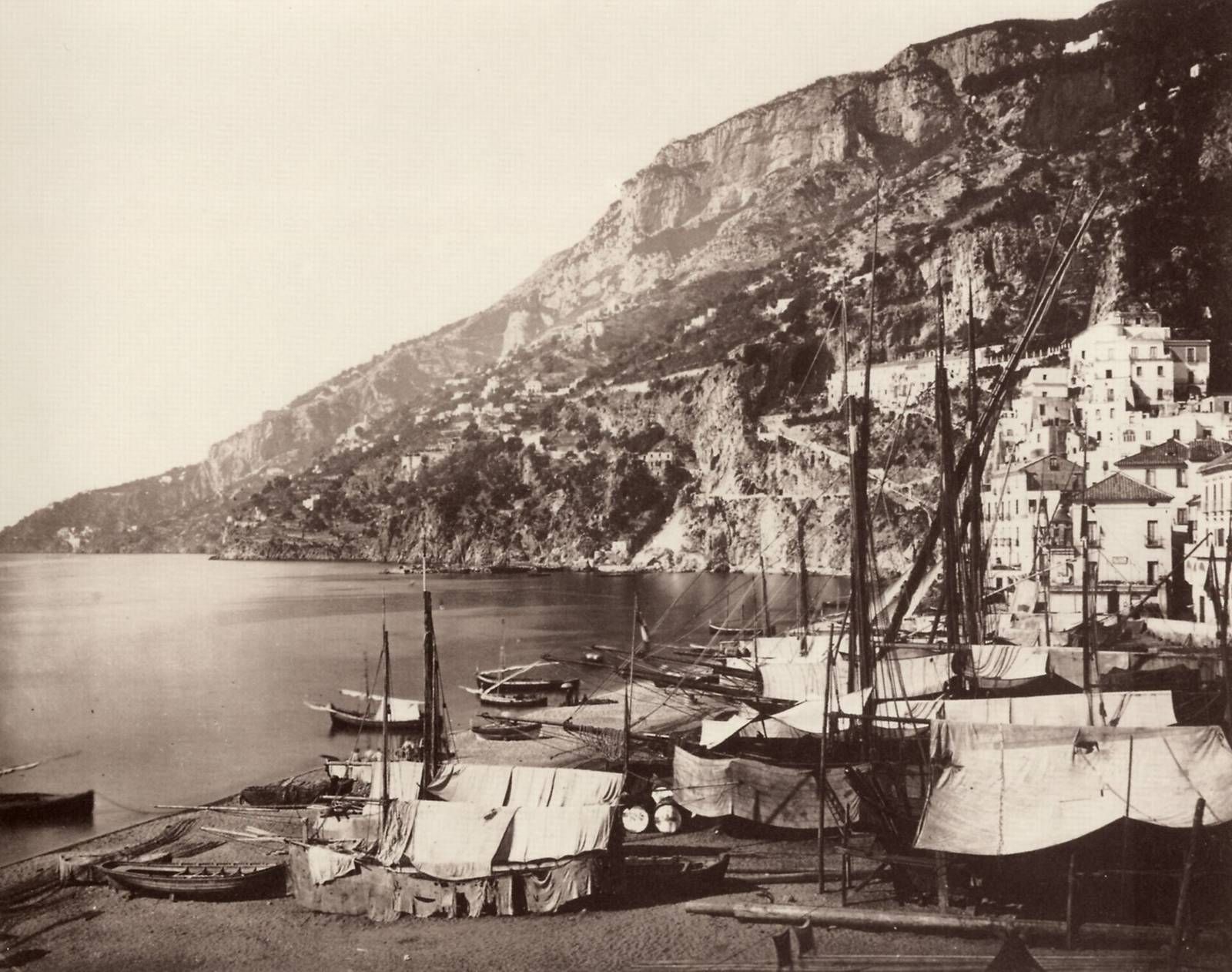
Campania genealogy goes wrong in a single word. The word is Naples. In Italian the city is Napoli. On a ship list, Napoli is very often the port of departure. In family stories, Naples becomes the whole region, and then the whole south. The civil registers were not written that way. They were written in a comune, filed toward a state archive that follows the province, and they still have to be opened town by town.
The provinces are Avellino, Benevento, Caserta, Napoli and Salerno. The archives to log by name are the Archivio di Stato di Napoli, Salerno, Caserta, Avellino and Benevento. You open them from Esplora gli Archivi and from archivi.cultura.gov.it. Name the archive in your notes. Do not store a homemade web address for it. The Portale Antenati is the front door for the filmed civil series.
The port, the city and the province
A passenger list has more than one place field. One field is the port. Another is the last residence, or the birthplace, or both crammed into a remark. When a clerk in the United States later filled a death certificate, the port was the word everyone in the house remembered. The village was not. If you still have the list, read the village. The Ellis Island and New York lists are the guide for that reading at the New York station. Other ports and other decades exist. The emigration guide is the page for journeys that did not end in the United States. A list that shows Napoli as the port can belong to a family that settled in Argentina or Brazil just as easily as to a family that settled in Brooklyn. The port still is not the birthplace.
The city of Napoli has civil registers of its own. They are the correct books when the person was born in the city. They are a life’s detour when the person was born in a town in Avellino, Benevento, Caserta or Salerno and only passed through the harbor. The province of Napoli is a third thing: comunes that are not the city and not the port. A gazetteer tells those apart. The FamilySearch Italy Gazetteers page is the starting point for choosing one. The hometown guide is the procedure: two records, then the gazetteer, then the province, then Antenati.
Saint names are the other Campania trap. San Giorgio, San Pietro, Santa Maria and their abbreviations match more than one comune. “S. Giorgio” on a manifest is a candidate list. “San Giorgio la Molara” is a comune you can test, and that particular town sits in the province of Benevento, so the archive would be the Archivio di Stato di Benevento. A different San Giorgio can sit in a different province. This is why the second document matters. One extra word changes the archive.
Do not assume one start date for every town
FamilySearch’s overview of important Italian research resources dates Napoleonic-style civil registration in the Kingdom of Naples from 1809, a Bourbon continuation from 1816, and unified civil registration generally from 1866. Use those as general ranges when the town you have identified belongs to that pattern. Do not paint the ranges onto every modern comune in Campania without looking. Towns did not all share one political history, and surviving books are a local fact. The listing on Antenati is the fact you can see. The research guide on the portal tells you how to move from an archive to a register. Indexed name search is a bonus. Browsing the year is the method.
The Campania wiki on FamilySearch collects the collection titles and the province links. Use it to discover whether a state-archive series is described, then use the catalog to open images. Some of those images carry a notice that they are viewable at a FamilySearch Center or an affiliate library. That notice is accurate. It is not a hint to switch to a different province. The FamilySearch guide explains the notice. Ancestry’s subscription copies of Italian civil images, where they exist for a province, are optional. They often reflect the same filming. They do not fill a year that was never filmed. The free-records guide separates what you can do before you pay.
Reading the act once you are in the right town
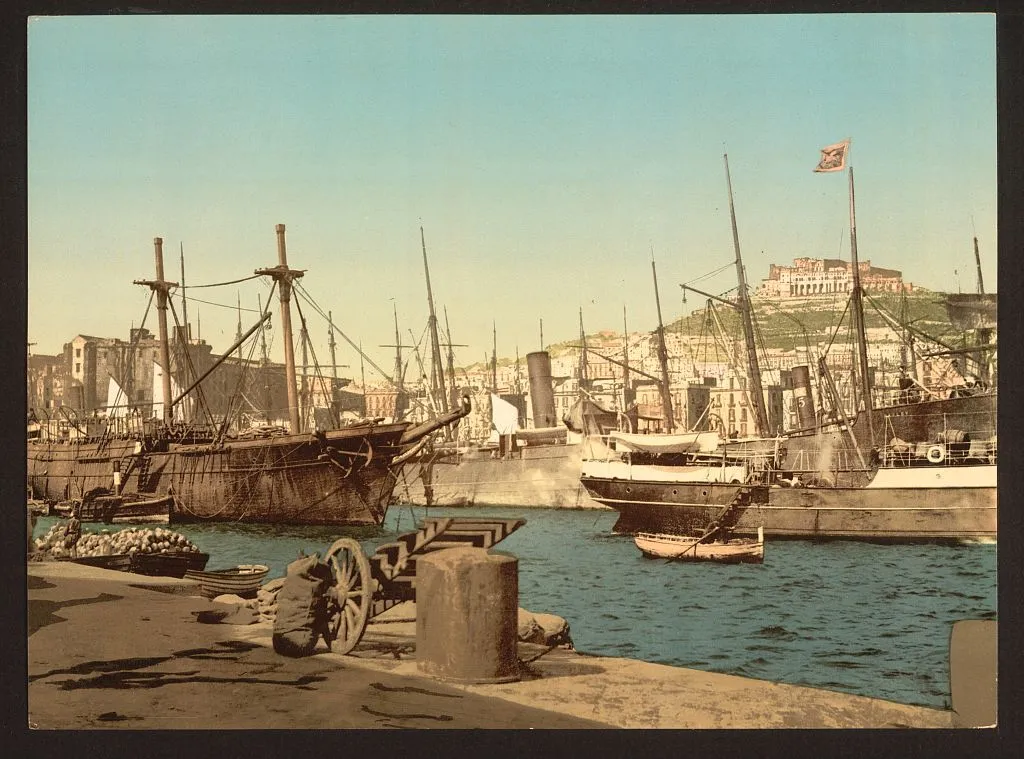
Harbor, Naples, Italy. Library of Congress, dated 1890 on the file.
A birth act is a declaration, usually by the father or a midwife, with witnesses. The child’s names, the parents’ names, ages, occupations and residence are the lines that identify the household. The residence may be a frazione inside the comune. If your American record named only the hamlet, this is the moment you confirm you opened the right municipality. If the residence in the act is a different hamlet, do not force a match. Back up and compare the parents’ names.
Marriage acts are often richer than births because of the papers attached to them. Death acts name a surviving spouse or a parent and are full of people who died away from the town of birth. If the only Campania event you can find is a death, read the birthplace line inside it before you decide the person was born where they died. The word list covers the recurring Italian. Copy it onto the worksheet with the archive name.
Women’s family names stay stable in these acts. If you “translate” the mother into the father’s surname, you will never find her birth. That mistake is common in trees built from Naples passenger lists, because the list itself may show a married woman under her husband’s name. The Italian act is the correction.
Letters, parishes and the last-name shortcut
When the year is not online, a letter to the comune about one event is the ordinary next step. Ask what a genealogical copy costs. The office sets the charge. This page does not. The kit is a folder of letter templates and logs, for family history, not a way to skip the town. A letter addressed to “Naples” with only a last name is a letter the clerk cannot file.
Parish books remain the path for baptisms before the civil series and for gaps. Identify the parish from the town, not from the region. A diocese is not a last-name index.
Last-name maps and “Neapolitan name” lists are the shortcut this region invites. A spelling can be frequent in Napoli province and also frequent somewhere else, and a crest sold for the spelling is not a grant of arms. The southern family names page and the origins page are the refusals. Use a map only as a place to look after a document has given you a word you can test. The distribution guide shows what those maps are made of. They are not a census of the century of emigration.
Invented example
Invented example. The family says the great-grandfather was from Naples. His passenger list shows the port of departure as Napoli and the last residence as “S. Giorgio.” His petition, matched by age and by his wife’s name, says he was born in San Giorgio la Molara. That comune is in the province of Benevento. The search belongs in the Archivio di Stato di Benevento, in that comune, in the birth year taken from the petition. It does not belong in the city of Napoli’s birth registers, and it does not belong in every other San Giorgio in Italy. If the Benevento listing does not contain the year, the next move is the FamilySearch catalog for that comune, then a letter to that comune. It is not a browse of the Archivio di Stato di Napoli “just in case.”
If the petition had said only “S. Giorgio” and the list had said only “Naples,” you would not yet have a comune. You would have a port and a saint. The honest log says so. You would look for a sibling, a marriage record or an obituary before you chose an archive.
Keep Campania in its fences
Avellino’s towns are not Napoli’s towns. Salerno is a city, a province and sometimes a port in its own right, which means a list can name Salerno without naming a village either. Caserta is not a neighborhood you can ignore because the ship said Naples. Benevento’s records live in Benevento’s archive once you know the comune. The regions hub is the wider warning: the region chooses the guide, the province chooses the archive, the comune chooses the book. The beginner guide is the order from the American document to that book. Campania is simply the region where skipping a step feels most reasonable, and costs the most time.
Sources
Questions readers actually ask
Is Naples the same as a birthplace in Campania?
Often it is only the port. Napoli is a city with its own civil registers, a province made of many other comunes, and the port from which people born in Avellino, Benevento, Caserta, Salerno and the city itself departed. A passenger list can print Napoli in the column for port of departure and a village in the column for last residence or birth. If a death certificate later collapses both facts into "Naples," the village is the fact you want. Search the city of Napoli only when a record identifies that city, or a comune inside it, as the place of birth. The Archivio di Stato di Napoli is not the birth book for everyone who sailed from the harbor.
Which archive should I open for a Campania town?
Match the province. The provinces are Avellino, Benevento, Caserta, Napoli and Salerno. The state archives are the Archivio di Stato di Napoli, Salerno, Caserta, Avellino and Benevento. Open them from Antenati's Esplora gli Archivi and from archivi.cultura.gov.it rather than from a hostname you guessed. Confirm the comune in a gazetteer before you choose. San Giorgio, Santa Maria and similar saint names occur in more than one province. A second document that includes the rest of the town's name is what makes the archive choice safe. If you have only the saint's name, you have a list of candidates, not a search.
What years of civil records should I expect?
FamilySearch's overview dates Napoleonic-style civil registration in the Kingdom of Naples from 1809 and a Bourbon continuation from 1816, and it dates unified Italian civil registration generally from 1866. Those are general ranges for that kingdom, not a certificate that every modern province in Campania has the same surviving run of books. Political boundaries inside the region were not identical to the kingdom's map in every town. Read the Antenati listing for the comune you have identified. If your year is absent, check the FamilySearch catalog, including any library lock on the images, and then consider a genealogical request to the comune for that single event.