
Surnames
Italian surname distribution maps
How to read Italian surname maps from telephone listings, and why a cluster is a place to search rather than a birthplace.
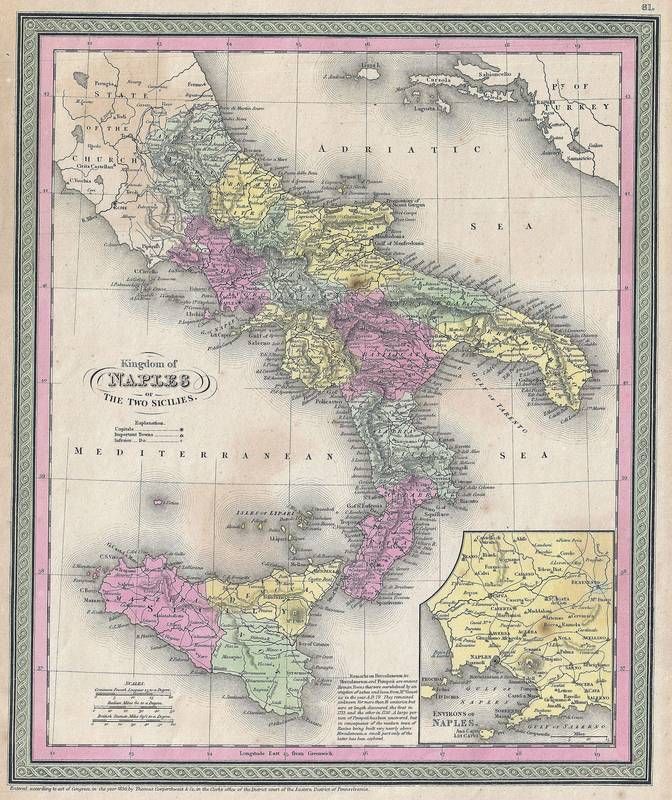
A surname distribution map is a picture of a spelling in a set of telephone listings. It is not a pedigree, not a census from the years people left Italy, and not a current count of everyone alive. Used with that sentence in view, it can tell you whether a spelling is widespread or concentrated, and which provinces are worth a second look when a document has already pointed you at a region. Used without that sentence, it becomes a false birthplace, which is the most common way these tools waste a search.
Three sites are the ones readers actually open. This page describes each one in the words of its own explanation, and then says what to do with the picture. The surname hub is the shorter caution. The origins page is about the meaning of the word, which is a different question and an even weaker way to choose a town.
What Gens says it is
Gens publishes last-name maps at gens.info/lib/cog. The project is built from Italian private telephone listings, grouped by comune. The instructions describe a database representing over 20 million private lines. That figure is the site’s description of its file. It is not a population of Italy, and it is not a count of emigrants. A private line is a telephone subscription in the data they used. Households without a listed private line are absent. Households that had left Italy decades earlier are absent. Households that shared a spelling and a town are visible as a cluster of listings, which is why the map can still be a clue.
Read a Gens cluster as “this spelling was listed in these comunes in the telephone data.” Then ask whether your paper trail already mentions that province. If it does, the cluster can help you prefer one garbled town over another when both are in that province and a gazetteer says both are real. If the paper trail mentions nothing, the cluster is a note in a drawer, not a conclusion.
What Cognomix says it is counting
Cognomix, on its mappe dei cognomi italiani pages, says it maps about 180,000 last names corresponding to 20,985,000 families, and that the figures are families, not individuals. Keep the second half of that sentence. A family in their count is not a person, and it is not an ancestor. Comparing a Cognomix total with a Gens total, or with anything you think you know about how many people bore the name, will not work, because the units are different and the underlying lists are directory lists. This page will not convert families into people. The site has already told you not to.
Cognomix is still useful as a second drawing of the same kind of fact. If Gens and Cognomix both show a tight cluster and little else, the spelling was concentrated in the listings they used. If they disagree, believe the disagreement. Directory projects are not required to match. A spelling that looks rare on one map and ordinary on another is a spelling you should not treat as rare.
What Mappa dei Cognomi says about its age
Mappa dei Cognomi says it was inspired by Gens and that it used telephone directories from the 1990s. The site is explicit that this is not a current population map. Do not cite it for where a last name “is” today. Do not cite it for where a surname was in the nineteenth century either. A directory from the 1990s sits after a century of internal migration and after the emigration you are studying. People in Milan with a Calabrian last name may be the grandchildren of people who left Cosenza province, or they may not be related to your immigrant at all. The map cannot say which.
The 1990s date is an advantage only in one narrow way: it is closer to the late twentieth century than a map drawn tomorrow would be, and still nowhere near the civil registers of the Kingdom of Naples or of unified Italy. Closer is not close enough to skip a record.
What none of them is
None of these sites is a historical census of the 1800s. None of them watched the pier. A comune that is dark on a map may have sent many people abroad, or few, and the map will not say. A comune that is pale may be the one your family left, if everyone who stayed behind was a small number of listed lines, or if the spelling was reshaped after they left. Emigration is exactly the process that removes people from a later Italian directory. Using the later directory as a picture of the earlier town reverses the story.
Postcard, Un saluto da Potenza, 1899, by Gabriele Agamennone. Biblioteca nazionale di Potenza. Public domain.
A cluster is a place to look, not proof of one ancestor’s town. Write that sentence at the top of the worksheet if you are about to color in a tree from a screenshot.
How to look a spelling up without fooling yourself
Search the spelling on the document, then the spelling the family uses now, then the spelling with and without Di, De or D’. The origins page explains those particles as grammar, not as nobility. Maps can split one historical name across several headings because the directory split them. If you only search the American form, you may conclude the name is rare in Italy when the Italian form is common.
Write down provinces, not just the single darkest comune. A province is something you can compare with a passenger list. A single comune is something you should open only when a record names it. If the map shows a scatter across the whole country, you have learned that the last name will not choose a region. Stop. Go back to American or other destination records. The Ellis Island guide is one door. It is not the only port.
If the map shows a southern cluster and your oral history says “the south,” you have a weak agreement between a story and a directory. It is still not a town. The southern surnames page and the regions hub are the next reading. Sicily, Calabria, Campania, Abruzzo and Basilicata do not share one archive. A cluster in the province of Agrigento is a Sicilian lead. A cluster in the province of Salerno is a Campania lead. They are not interchangeable because both feel southern.
From a cluster to a register
The moment a document names a place, leave the map. Test the place in a gazetteer, using the FamilySearch Italy Gazetteers page as the pointer. Separate the port from the town. Confirm the province. Then open Antenati through Esplora gli Archivi and the archive for that province. The hometown guide is that sequence in full. The Antenati walkthrough is the clicking.
If you write to a comune, write about one person and one event. The kit holds letter templates for that request. It is not a way to ask a town whether a last-name map is correct. The office does not have the map’s data, and the map does not have the office’s books.
Do not average three maps into a hometown. Do not pick the comune with the largest blob because a blog told you “most of the name” lives there. This page does not quote shares, and the sites’ own figures are about listings and families in their databases, not about your grandfather’s birth.
Invented example
Invented example. A researcher looks up a last name and finds a dense cluster in the province of Cosenza on one map, a thinner cluster in Lombardy on another, and a note that Mappa dei Cognomi is built from directories of the 1990s. The only family story is “Calabria.” There is no town on the death certificate. The honest result is: the spelling is present in Cosenza province in those listings, it is not confined there, and the Lombardy cluster may be later migration or a separate family. Calabria is a region. The Calabria guide explains that Cosenza is both a city and a province, and that a search still needs a comune. The next work is another record in the country of arrival, not a letter to the darkest town in the province of Cosenza.
Suppose a week later a sibling’s naturalization petition says the father was born in Rende. Rende is a comune in the province of Cosenza. Now the map and the petition point the same way, and the petition is the reason you open the Archivio di Stato di Cosenza. The map did not identify Rende. The petition did. If the petition had said a town in the province of Potenza instead, you would follow the petition into the Basilicata archives and let the map be wrong, or let it be about a different set of families. Directories do not outrank a place of birth written for a specific person.
Keep the numbers attached to the sites
When you mention these tools to anyone else, attach the figures to the sites that published them. Over 20 million private lines is Gens describing its instructions. About 180,000 last names and 20,985,000 families, counted as families and not as individuals, is Cognomix describing its maps. The 1990s telephone directories are Mappa dei Cognomi describing itself, with the warning that the result is not a current population map. Those are the only counts this page uses. They measure listings. Your ancestor is identified in a register, or not yet identified at all.
Sources
Questions readers actually ask
Do Italian last-name maps show where my ancestor was born?
They show where a spelling clustered in the telephone data those sites describe, which is a late-twentieth-century snapshot, not a birth. Gens says its instructions describe a database representing over 20 million private lines, grouped by comune. Cognomix says it maps about 180,000 last names corresponding to 20,985,000 families, and that the figures are families, not individuals. Mappa dei Cognomi says it was inspired by Gens and used telephone directories from the 1990s, so it is not a current population map. None of them is a historical census of the 1800s. A cluster is a place to look once you already have a reason to look there. It is not proof of one ancestor's town. People moved before those directories were printed, including the emigration you are trying to trace.
Which map should I trust when they disagree?
Trust none of them as a birthplace, and use the disagreement as information. Different directory years, different ways of counting a household, and different treatments of a spelling will not paint the same comune in the same shade. If one map puts a dense cluster in Cosenza province and another spreads the spelling more widely, you have learned that the spelling is not a single-town name, or that the tools are not identical. You have not learned which tool is "right." Write down the provinces both of them mark, and return to documents. If a passenger list later names a town in one of those provinces, the map has done its job. If the list names a town in a province neither map marked, follow the list.
Can I write to the darkest town on the map?
Not with only the map. A comune can answer a question about a named person and a named event if it holds the act. It cannot usefully search "everyone of this last name" on the strength of a directory from the 1990s. Pick the town only when a record names it, or when a gazetteer shows that a garbled string in a record is that town. Then open Antenati for that archive and that year. The kit's letter templates are for that later step, one event at a time. Using them on the darkest pixel is how you create a letter the clerk cannot match, and how you convince yourself the records were destroyed when you simply wrote to the wrong office.